
Schumer Set to Return as Senate Majority Leader After Democratic Sweep
Democrats will hold at least 54 seats in January. Chuck Schumer is the favorite to lead them, though a few incoming senators have signaled doubts.
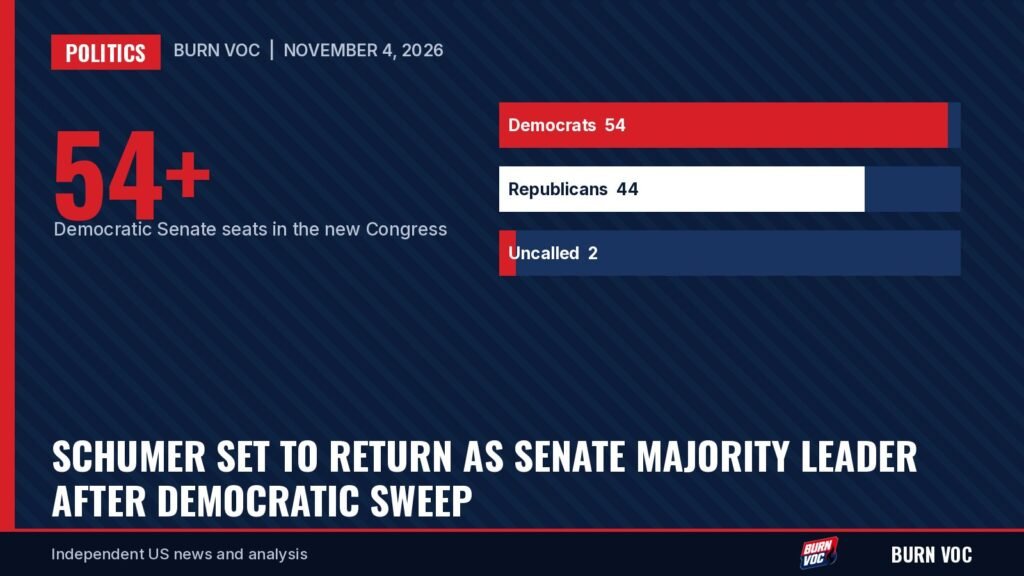
Senate Democratic leader Chuck Schumer of New York is positioned to become majority leader again in January after his party won control of the chamber in Tuesday’s midterm elections, The Hill and the Associated Press reported.
The new math
Democrats have won at least 54 seats, counting two independents who caucus with them, while Republicans have 44, according to tallies reported by Politico and the Guardian. Races in Alaska and Mississippi remain uncalled, and either could push the Democratic majority higher.
Schumer’s position
Schumer celebrated the takeover on Wednesday, The Hill reported. Before the election, the AP had reported that the midterms could decide his future as leader, after some Democrats criticized his handling of earlier fights with the Trump administration.
Senate Democrats are expected to hold their leadership elections in early December. Schumer is considered the strong favorite, and no clear challenger had emerged as of Wednesday, though some Democratic candidates had said during their campaigns that they would not support him for leader. Whether those senators-elect follow through will be closely watched.
Republicans regroup
Senate Majority Leader John Thune of South Dakota is expected to lead Republicans in the minority. Republicans will move into the minority for the first time since 2021.
What changes in January
A Senate majority gives Democrats control of the floor schedule and every committee. That means they will decide which of President Donald Trump’s nominees, including federal judges, get hearings and votes. They will also be able to launch investigations and shape spending bills.
Democrats will not have the 60 votes needed to overcome a filibuster on most legislation, and Trump can veto bills that reach his desk. In practice, that means the Senate’s biggest new power may be the ability to block, rather than pass, major policy.
The new Congress will be sworn in on Jan. 3, 2027.
How we reported this
This report is based on information confirmed by the Associated Press or by at least two major news organizations, as noted in the text. Figures from early or partial counts are identified as such and may change. BURN VOC will update this story as new information is released.