Analysis: What Divided Government Means for the Economy and the Fed
Democrats in Congress and a Republican president point to fewer big policy swings, but spending deadlines and rate decisions still loom.
With Democrats set to control both chambers of Congress and President Donald Trump in the White House for two more years, Washington is heading into a period of divided government. Here is what that could mean for the economy.
Fewer sweeping changes
When different parties control Congress and the presidency, major legislation becomes harder to pass. Large tax cuts or new spending programs generally require agreement from both sides. That is one reason stock investors often welcome divided government, market strategists told CNBC on Wednesday, as the Dow rose more than 1,000 points.
The flip side is that routine but essential work can become harder, including funding the government and handling the federal debt limit.
Spending fights
Congress must pass funding bills each year to keep agencies open. With a Democratic Congress and a Republican president, negotiations over spending levels, immigration enforcement and health programs are likely to be tense. Shutdown threats have become more common in recent years, and either side can use deadlines as leverage.
The Federal Reserve
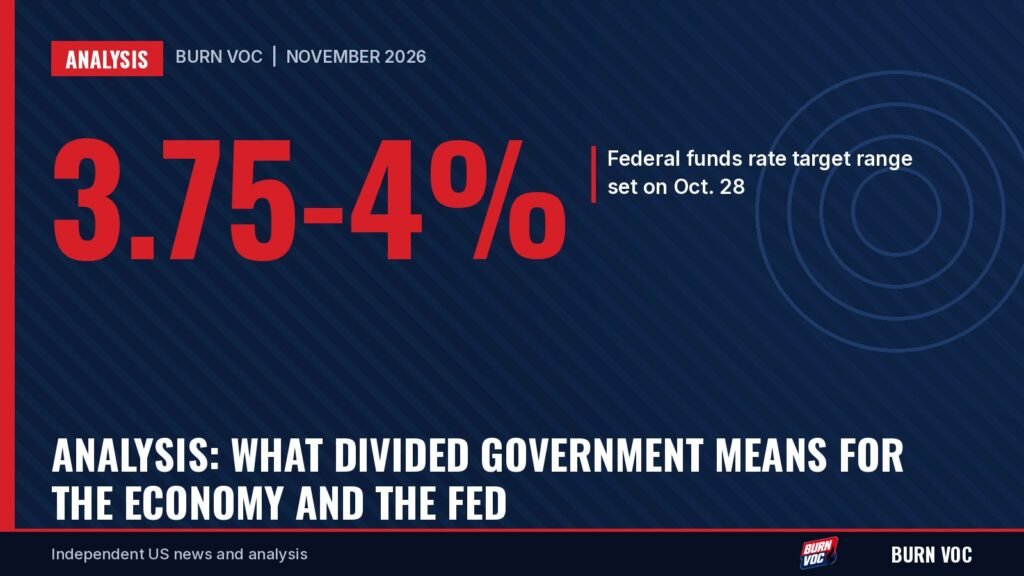
The Fed is independent of Congress and the White House, but politics affects its environment. At its Oct. 28 meeting, the central bank kept its benchmark rate in a range of 3.75 percent to 4 percent, according to its policy statement. The vote was 10 to 2, with Governor Lisa Cook and Cleveland Fed President Beth Hammack preferring a rate increase, according to the statement.
That split showed growing concern among some officials that inflation remains too high. The Fed’s next meeting is scheduled for Dec. 8 and 9.
Democrats in control of Senate committees will have a larger role in confirming future Fed nominees and in holding oversight hearings on monetary policy.
Tariffs and trade
Trade policy is largely controlled by the president under current law, so Democratic control of Congress may not quickly change tariffs. Democrats could hold hearings, pass resolutions or use spending bills to press the issue, but the president can veto legislation.
What it means for households
For most people, the biggest economic factors over the next year are likely to be prices, interest rates on mortgages and credit cards, and the strength of the job market. The government’s October jobs report, due Friday, will offer the next major reading on the labor market.
Election results can shift expectations, but analysts note that inflation and borrowing costs usually depend more on the economy itself than on who controls Congress.
How we reported this
This report is based on information confirmed by the Associated Press or by at least two major news organizations, as noted in the text. Figures from early or partial counts are identified as such and may change. BURN VOC will update this story as new information is released.