What a Democratic Congress Means for Trump’s Final Two Years
Divided government brings investigations, budget fights and veto threats. Here is what changes when Democrats take control in January.
When the new Congress convenes in January, Democrats will control both the House and the Senate for the first time in Donald Trump’s second term. Here is what that shift means in practice.
The legislative agenda
The majority party controls which bills come to the floor. Democrats will set the agenda in both chambers, and Republican priorities that require legislation will be difficult to pass.
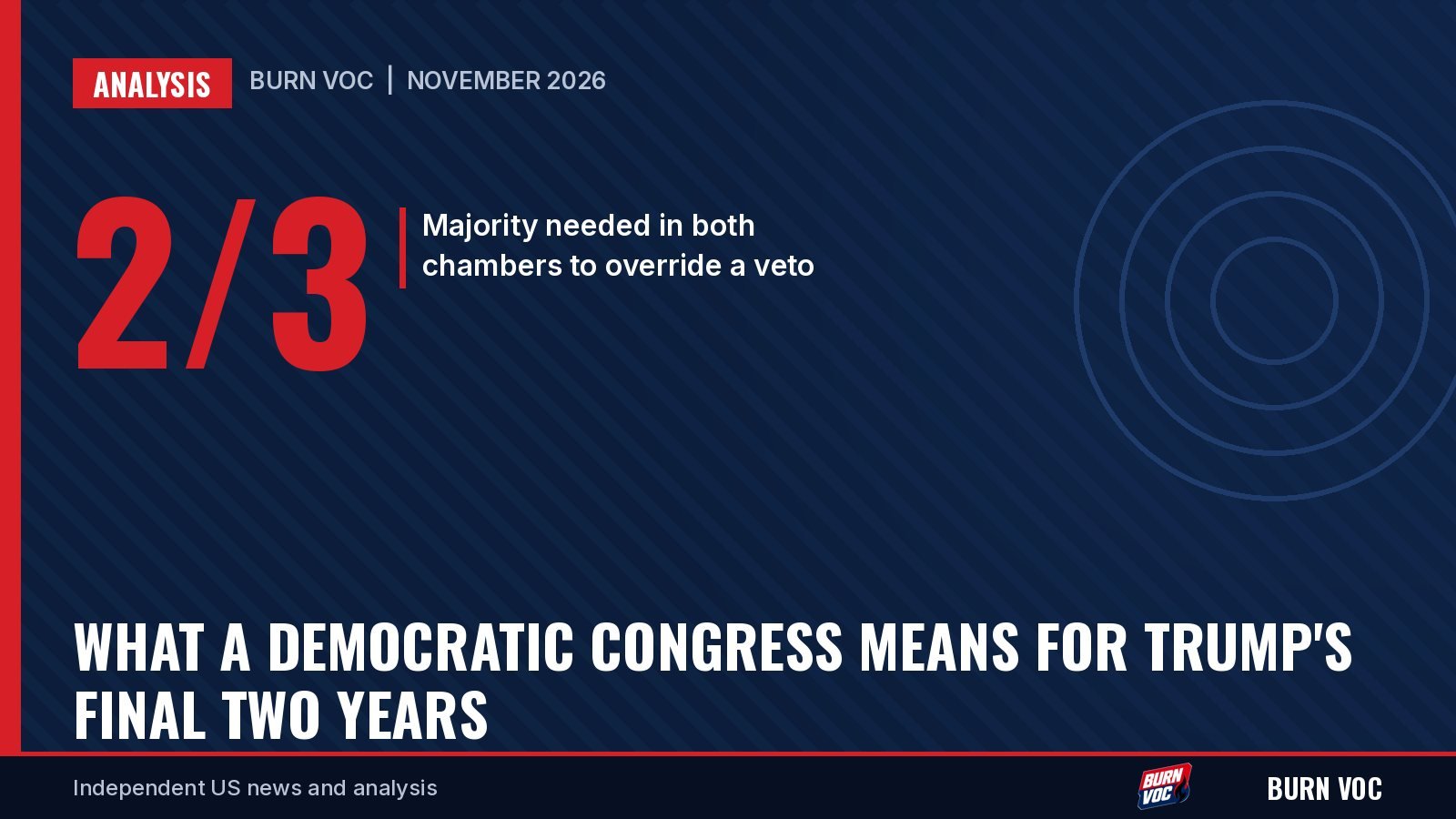
The president keeps the veto. Trump told The Wall Street Journal he would work with Democrats but veto legislation he finds unacceptable. Overriding a veto requires two-thirds of both chambers, a threshold Democrats are far from reaching.
The likely result is a mix of negotiation on must-pass bills and gridlock on contested issues.
Spending fights
Congress controls federal spending. Government funding and the debt limit will be the main points of leverage. Democrats are expected to use appropriations bills to push back on administration priorities, including spending tied to the Iran war and immigration enforcement.
Current funding for some programs, including military aid to Israel, already runs through September 2027, according to the AP.
Oversight and investigations
With a House majority, Democrats will chair every committee and gain subpoena power. Expect hearings on the Iran war, energy prices, tariffs and immigration operations. Investigations can shape public opinion even without new laws.
Nominations
A Democratic Senate will decide whether to confirm the president’s nominees, including Cabinet members, ambassadors and federal judges. That gives the majority significant influence over the executive branch and the courts. Any Supreme Court vacancy would become a major test.
War powers
Lawmakers from both parties have debated the president’s authority to conduct military operations against Iran. A Democratic Congress could pass a war powers resolution. Trump would likely veto it, but the vote would put lawmakers on record.
Executive action
Facing a hostile Congress, presidents often rely more heavily on executive orders and regulatory actions. Many of those will end up in court.
The 2028 shadow
Both parties will look ahead to the next presidential election. Democrats will try to show they can govern, while Republicans will argue Democrats are obstructing the president. Prices, the war and the economy will likely decide which argument lands.
How we reported this
This report is based on information confirmed by the Associated Press or by at least two major news organizations, as noted in the text. Claims that have not been independently verified are identified as such. BURN VOC will update this story as new information is released.