Why Trump and the Republicans Lost the 2026 Midterms
High prices, an unpopular war with Iran and shifts among Latino and young voters combined into a broad rebuke of the president's party. Here is what the data shows.
Republicans lost control of both the House and the Senate on Tuesday in a midterm election that the Associated Press described as a rebuke of President Donald Trump over high costs. The exit polls and the results point to a handful of clear drivers.
1. The cost of living
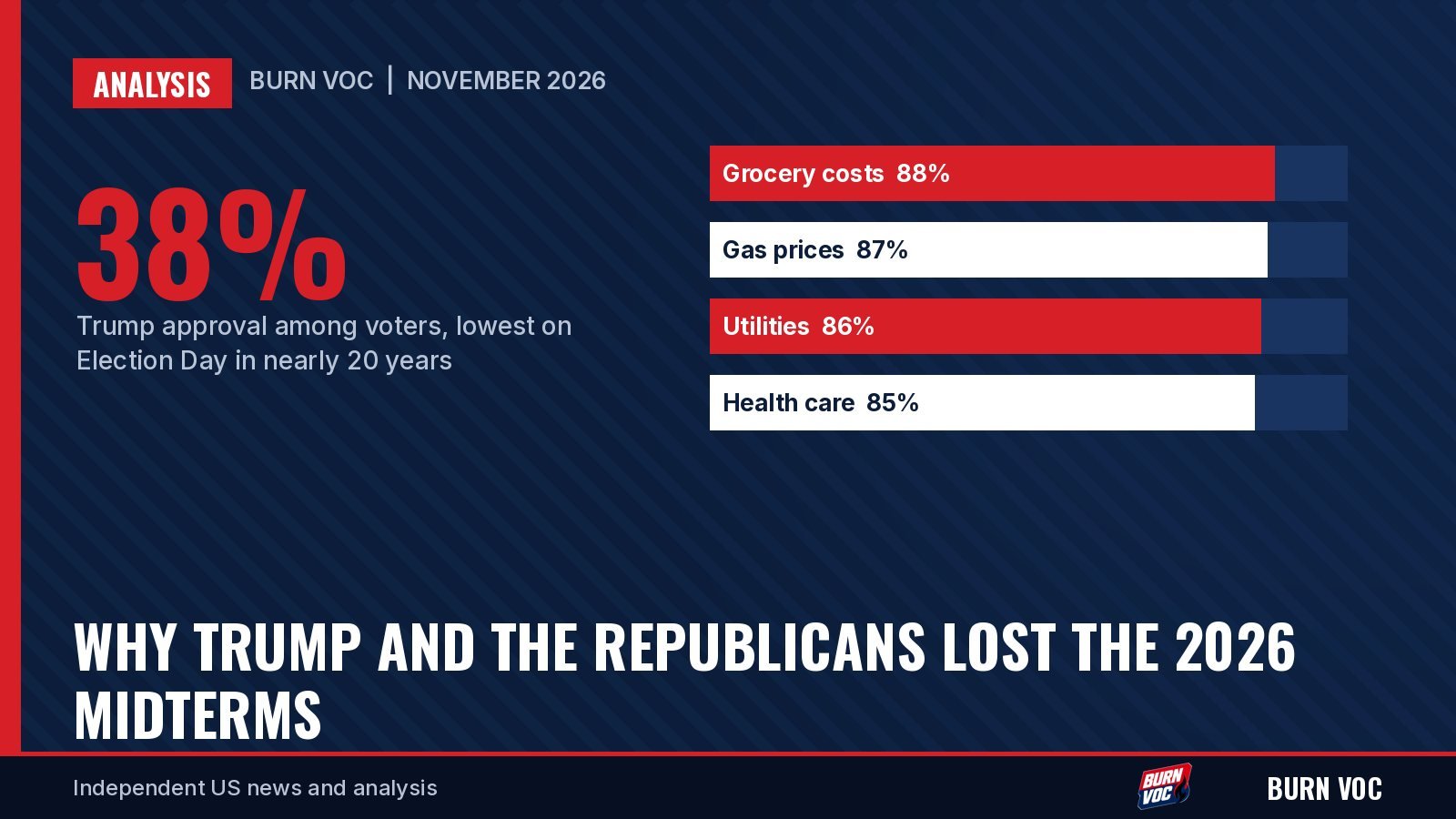
Voters were worried about prices. The NBC News exit poll found that 88 percent of voters were concerned about grocery costs, 87 percent about gas and diesel prices, 86 percent about utilities and 85 percent about health care.
Gas prices stood at about $4.14 a gallon on Election Day, up roughly 38 percent since the Iran war began in February, ABC News reported, citing AAA data. The AP pointed to high costs after the war and what it called a punishing tariff policy.
2. The Iran war
Sixty-three percent of voters said US military action against Iran was the wrong decision, according to the NBC News exit poll. Trump himself acknowledged the link. “I think a part of it was Iran,” he told Fox News, adding that voters were not willing to accept higher gasoline prices.
3. A referendum on the president
Trump’s approval among voters was 38 percent, the lowest for a sitting president on Election Day in nearly two decades, according to NBC News. In 2018, his approval in the same poll was 45 percent. Forty-three percent of voters said they cast their ballot to oppose him.
Midterms often punish the party in the White House. This year’s swing was unusually broad, reaching states like Kansas, Texas and South Carolina.
4. Latino and young voters shifted
Latino voters backed Democratic House candidates 62 percent to 35 percent, according to the NBC News exit poll, a sharp shift from 2024, when the same group split far more closely in the presidential race. About seven in ten voters under 30 supported Democrats, according to AP VoteCast.
5. Tariffs
Reuters reported that Democrats successfully blamed tariff policy, along with the war, for driving up costs. Trade policy was a constant theme in Democratic advertising in farm states and manufacturing regions.
What Republicans are saying
Some Republicans argued that the party’s losses reflected the usual midterm penalty and strong Democratic turnout. Trump said he would accept the results and work with Democrats, while vowing to veto bills he considers unacceptable.
The bottom line
The data paints a consistent picture: voters who felt squeezed by prices, and who largely opposed the Iran war, held the president’s party responsible. Whether that pattern holds into 2028 will depend on what happens to prices, the war and the new divided government.
How we reported this
This report is based on information confirmed by the Associated Press or by at least two major news organizations, as noted in the text. Claims that have not been independently verified are identified as such. BURN VOC will update this story as new information is released.