NASA’s Swift Observatory Falls From Orbit Over Indonesia After 22 Years
The U.S. Space Force confirmed Swift reentered over North Sumatra on Wednesday, ending a 22-year gamma-ray burst mission after a rescue effort failed.
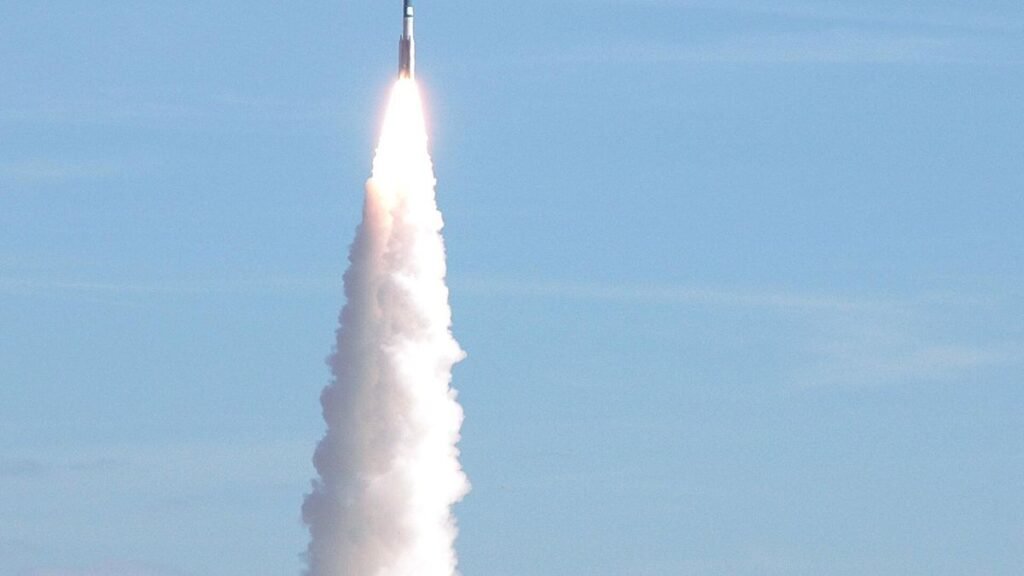
NASA’s Neil Gehrels Swift Observatory came down through Earth’s atmosphere at 7:39 a.m. EST Wednesday over the North Sumatra region of Indonesia, the U.S. Space Force confirmed, according to NASA. The reentry ended a mission that began in 2004 and was planned to last two years.
NASA said it expected most of the spacecraft to burn up, but that some components may have survived. The agency had put the risk of anyone on the ground being hurt by surviving fragments at about 1 in 2,100, Spaceflight Now reported.
A rescue tug that never reached Swift
Swift had no engine of its own. Solar activity over the past few years heated and expanded the upper atmosphere, creating more drag than NASA expected and pulling the observatory lower, Spaceflight Now and the Associated Press reported.
NASA paid Katalyst Space $30 million to send a robotic craft called LINK to grab Swift and boost it higher, according to Spaceflight Now. The craft lost control of its orientation weeks after its July 3 launch, and NASA called off the capture attempt on Aug. 19. Swift made its last science observation on Oct. 20 from about 171 miles above Earth.
Two decades of gamma-ray burst hunting
Swift launched from Cape Canaveral on a Delta II rocket on Nov. 20, 2004. It was built to swing its three telescopes quickly toward gamma-ray bursts, the most powerful explosions known, and alert other observatories so they could follow up.
Over its life, Swift observed more than 2,000 gamma-ray bursts and studied more than 1,400 supernovae, and its data contributed to about 7,000 scientific papers, according to NASA figures cited by Spaceflight Now. NASA said the observatory also studied black holes in active galaxies, flaring stars, comets and asteroids.
Sources: NASA, Spaceflight Now, Associated Press.
Get the BURN VOC Briefing
Top US news in your inbox. Free.
This story is published by BURN VOC under its newsroom byline and follows our editorial standards. Sources are named in the story. To report an error, email news@burnvoc.com. Editorial Standards · Corrections · About BURN VOC