FAA Orders Sealant Checks on 60 U.S. Boeing 787s Over Lightning Risk
FAA orders center-wing fuel-tank sealant inspections on certain U.S. Boeing 787s after production checks could not be verified.
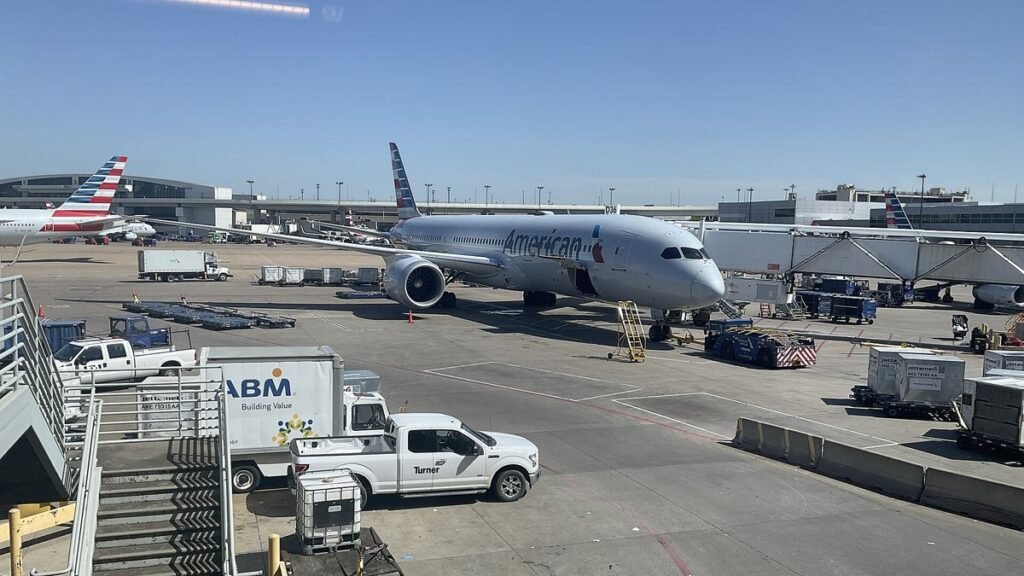
The Federal Aviation Administration published a final airworthiness directive on Monday that requires airlines to inspect and adhesion-test sealant inside the center wing fuel tank on certain Boeing 787 Dreamliners. The rule, AD 2026-22-05, takes effect Dec. 7 and covers Model 787-8, 787-9 and 787-10 airplanes listed in a Boeing alert requirements bulletin dated Nov. 5, 2025. The agency estimates 60 U.S.-registered jets are affected.
The directive was prompted by a report that some sealant installations did not receive required visual and adhesion inspections during production, or that those checks could not be documented, according to the Federal Register text. Edge seals, fillet seals, seal caps and injection seals are among the installations covered.
Lightning-strike ignition risk
If left uncorrected, the FAA said, sealant defects “could result in development of an ignition source within the fuel tank volume and a risk of a fuel tank explosion during a lightning strike event.” The directive does not report any lightning-related incident on a 787, and the aircraft remain in service while operators schedule the work.
Operators must inspect sealant in the left, right and center wing side-of-body areas, including the area between the side-of-body rib and rib 2, run adhesion tests, and repair defects. The FAA estimates 34 work-hours, or $2,890, per airplane for the inspection and test, and $173,400 across the 60 U.S. jets. It had no firm estimate for repair costs. Boeing has said some or all costs may be covered under warranty, the agency noted.
What changed after comments
The FAA proposed the rule in February and took comments through April. The Air Line Pilots Association, United Airlines and one individual supported it without change. Boeing and American Airlines asked the agency to allow sealant repairs under existing Boeing airworthiness limitations rather than separate approvals for each fix. The FAA agreed in part and wrote those limitations into the final rule as an accepted repair path.
The agency also confirmed that the missing production inspections apply only to the airplanes named in the bulletin, and that sealant checks are now being performed in production on 787s outside the directive’s scope. Foreign regulators decide separately whether to adopt the FAA order for jets on their registries.
Sources: Federal Register (AD 2026-22-05), AVweb, FlyingFuel.
Get the BURN VOC Briefing
Top US news in your inbox. Free.
This story is published by BURN VOC under its newsroom byline and follows our editorial standards. Sources are named in the story. To report an error, email news@burnvoc.com. Editorial Standards · Corrections · About BURN VOC